November 20, 2026
Where to put your home EV charger for the best results
By @chargeathome
Choosing a location for a residential EV charger is more than picking a spot on the garage wall that looks convenient. The spot you choose affects how easy the charger is to use every day, how much the installation costs, and whether your home's electrical system can handle the load. A little planning upfront can save you from running extension cords across the floor or paying for costly electrical work later.
Start by thinking about where you park. The charger needs to reach your car's charging port without the cable stretching tight or lying across a walkway where someone could trip. Most drivers park in the same spot every time, so note where the charging port is on your car. Some vehicles have the port at the front, others at the rear or on one side. Measure the distance from that spot to the nearest wall or post where you could mount the charger. If the cable is twenty feet long and your car's port is on the opposite side, you may need to park differently or choose a closer mounting point.
Check your electrical panel first
Before you settle on a location, look at your main electrical panel. A Level 2 charger needs a dedicated circuit, usually 40 to 60 amps, with its own circuit breaker. The panel must have space for that new breaker and enough spare capacity to supply the charger without overloading the system. An electrician can perform a load calculation to see if your panel can handle the extra draw. If the panel is already near its limit, you may need to upgrade it or choose a charger with a lower amperage. That decision can affect where you place the charger because a panel upgrade changes the routing of new wiring.
The distance from the panel to the charger location matters too. Longer runs mean more copper wire, which costs more, and may require larger wire gauge to avoid voltage drop. A spot close to the panel keeps material costs lower and makes the installation simpler. But do not let that one factor overrule convenience. A spot that is cheap to wire but forces you to park awkwardly every night is not a good trade-off.
Indoor versus outdoor mounting
Most home chargers go inside a garage, and for good reason. A garage keeps the charger and the charging cable out of the weather, reduces wear from sun and rain, and makes it easier to keep the area tidy. If you have a garage, that is usually the best place. But not every garage is ideal. A cluttered garage with stored items against the walls may need reorganising to free up wall space near the parking spot. Think about future storage needs too. The charger should stay accessible even after you add shelves or park a second car.

If you do not have a garage, an outdoor installation is the next option. Outdoor chargers are built to handle rain, dust, and temperature swings, but they still need protection. Mount the charger under an eave or on a wall that is sheltered from direct rain. Make sure the charging cable can reach the car without lying across a driveway where a vehicle could run over it. Outdoor installations also require conduit to protect the wiring, and the charger must be properly grounded. This is where a professional garage charger installation becomes important, because outdoor wiring has specific code requirements that are easy to get wrong without experience.
Think about cable management
A charger with a dangling cable can become a nuisance fast. The cable is thick and heavy, and if it lies on the floor, people trip over it, pets chew on it, and it collects dirt. Look for a charger that includes a built-in holster or hook to hold the connector when not in use. Mount the charger at a height that lets you reach the holster easily but keeps the cable off the ground. About four feet off the floor is a common height, but adjust it based on your own reach and the cable length.
If you park in a tight garage, consider a charger with a shorter cable to reduce clutter, or one with a retractable cord system. Some chargers let you coil the cable around the unit. Others need a separate cable management arm. Think about how the cable will sit when the car is plugged in. It should not loop across the garage door track or brush against a car's tire. A little planning here keeps the space looking neat and the cable in good condition.
Consider future-proofing
Your next car may have a different charging port location or a higher charging speed. If you install a charger today, think about whether the location will still work if you buy a larger vehicle, a second EV, or if you move the parking spot. Running conduit with extra capacity now, or installing a charger on a pedestal rather than directly on a wall, can make future changes easier. A location near the front center of the garage often works for a range of vehicles, because the cable can reach both sides of the car with some slack.
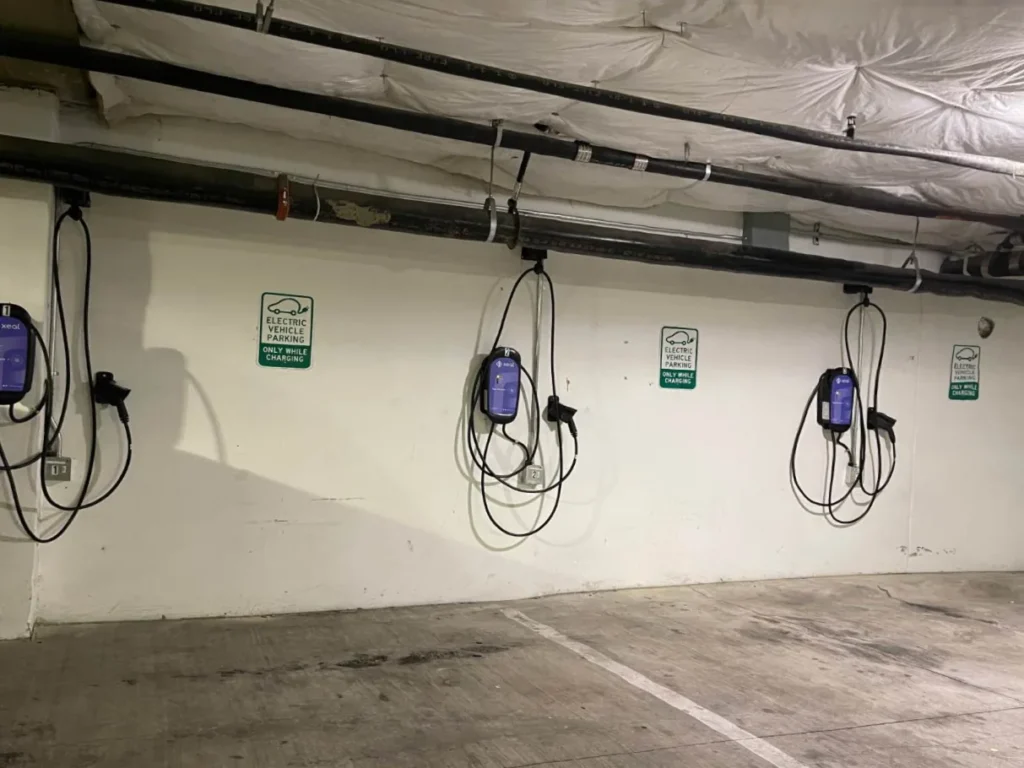
If you plan to stay in the house for many years, consider installing a charger that can handle higher amperage even if your current car does not need it. The wiring and breaker are sized for the circuit, not the charger. If you install a 50-amp circuit now, you can swap the charger later for a faster model without rewiring. That kind of planning pays off when you upgrade your car.
Watch for obstacles and code requirements
Local electrical codes dictate how close a charger can be to water pipes, gas meters, and other utilities. The charger must be grounded, and the circuit must have GFCI protection in some areas. If you mount the charger outdoors, it needs to be at least a certain distance from a pool or hose bib. These rules exist for safety, but they can limit where you place the charger. An electrician who does residential work knows the local code and can point out spots that seem fine but are not allowed.
Also check for obstacles between the panel and the charger location. Running wire through finished walls, concrete floors, or tight attic spaces adds labour and cost. A route that follows an unfinished basement ceiling or runs along an exterior wall in conduit is usually simpler. If your panel is in the basement and the garage is on the other side of the house, the wiring path may be long and expensive. That does not mean you should pick a worse location, but it is worth knowing the cost difference before you decide.
Balance convenience with cost
The ideal spot is close to the panel, sheltered from weather, at a comfortable height, and within easy reach of your car's charging port. In practice, you may have to compromise on one or two of those factors. If the perfect spot requires running wire through three rooms, you might choose a slightly less convenient spot that costs half as much to wire. On the other hand, if the cheapest spot means you have to back the car in every time or stretch the cable across the garage floor, the daily annoyance is not worth the savings.

Talk to a licensed electrician before you finalise the location. They can look at your panel, measure distances, and give you a realistic picture of the options. A professional garage charger installation ensures the charger is mounted securely, the wiring meets code, and the circuit is sized correctly. That peace of mind is worth the upfront effort of choosing the right spot.
❧